You've got the recipes. The harder question is where the customers are. In Canada that answer depends as much on your province's rulebook as on your marketing. Here are eight real channels, what each one costs, and the catch nobody mentions.
First: what your province lets you sell
Canada has no single cottage food law. Each province writes its own, and they are nowhere near the same. The channel matters far less than the rulebook behind it.
- Ontario. Low-risk foods (breads without fillings, cookies, brownies, muffins, cakes whose icing doesn't need refrigeration, jams, granola) can be made in a home kitchen in a residential zone. Notify your local public health unit at least 14 days before you open.
- Alberta. Low-risk home-prepared foods need no permit at all. You do have to label every item with the product and producer details.
- Quebec. A MAPAQ permit is required, production is capped at 100 kg per month, and you must sell directly to the person eating it. See our Quebec permit guide.
- British Columbia. No general cottage food exemption. The Home-Based Craft Food route needs FoodSafe Level 1, a local business permit, and under $75,000 a year in food income.
Every channel below assumes you're already compliant where you cook. Rules and fees change, so confirm with your province and your municipality before you sell. This isn't legal advice.
1. Farmers' markets
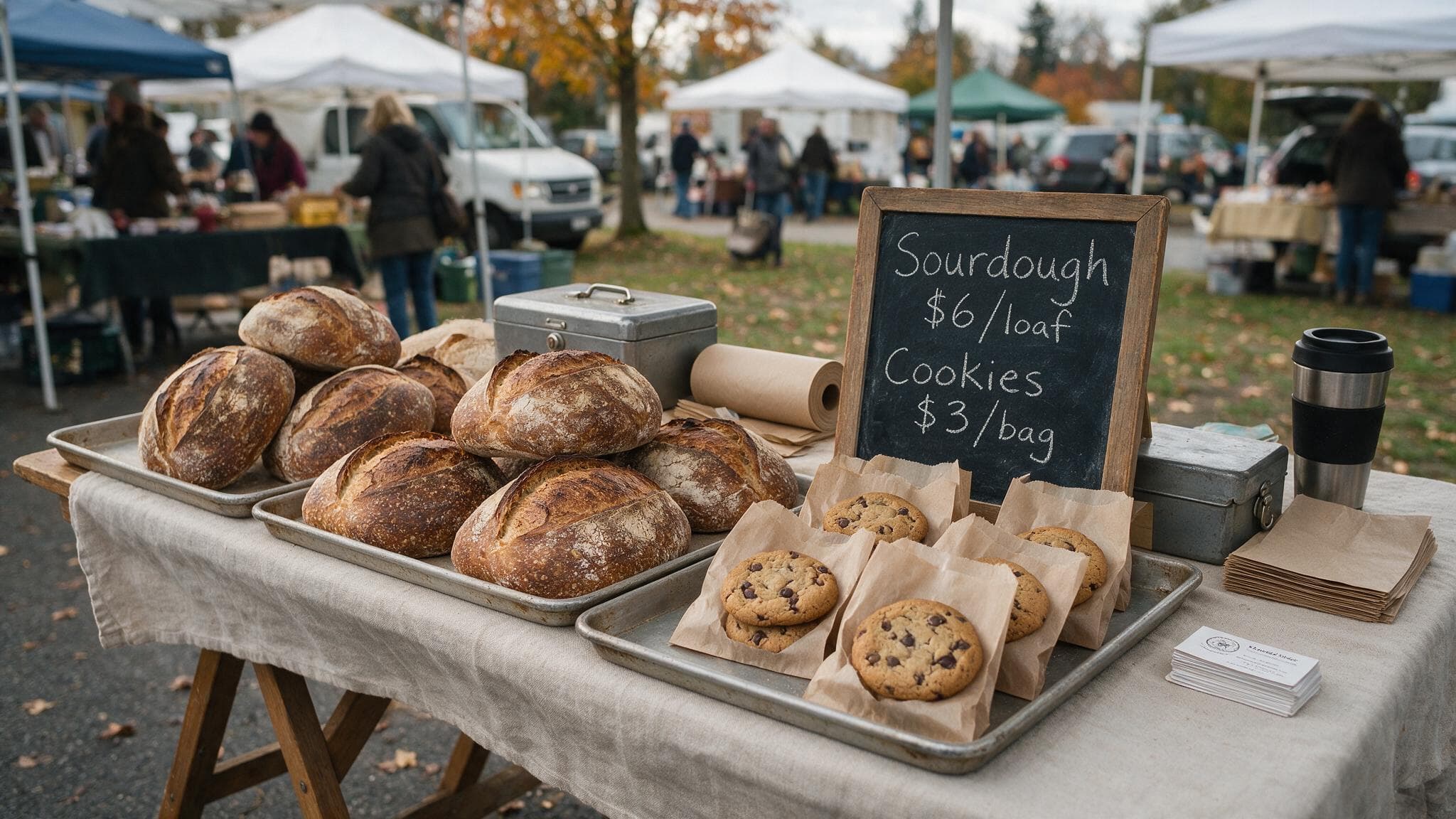
Still the best place to meet a hundred strangers who came specifically to buy food. Expect a membership fee plus a stall fee: the Ottawa Farmers' Market, for example, charges $150 in your first year and $50 annually after that, and day stalls at Canadian markets commonly run $20–$50. Most markets also require $2 million in liability insurance, and some cap how much of your product can be non-local. Ottawa's Lansdowne market asks prepared-food vendors for 15% local ingredients by cost.
The real cost isn't the stall fee. It's the Saturday: six hours of standing, plus the Friday you spent baking for it. Markets pay best when you treat them as customer acquisition, not as your storefront: everyone who buys should leave holding a card with your order link on it.
2. Your own order link
The only channel nobody can take away from you, raise the fees on, or shut down. One link that shows your menu, your pickup windows and takes the payment. Put it in your Instagram bio, in your WhatsApp status, printed on the box lid. Every other channel on this list should feed into it.
That's exactly what Swaddra is. You get a public store page at swaddra.com/store/yourname, live the same afternoon you sign up, with no website to build and no developer to hire. Customers tap the link, browse your menu, choose a pickup time and pay by card or in cash. The money goes straight to your bank; we never hold it. Here's a real Swaddra store if you want to see one first.
It's free to start, and it's the only item on this list that gets more valuable the more you use the other seven.
3. Facebook community groups
Underrated, and free. Neighbourhood buy-and-sell groups, local parent groups, and cultural community groups are where a lot of Canadian home bakers get their first fifty customers. Facebook permits food posts, and in Canada the practical limit is shelf-stable items: breads, cookies, jams. Note there's no "food" category on Marketplace, so listings land in general categories and get buried; groups convert far better than Marketplace does.
4. Instagram
Instagram is discovery, not checkout. It's excellent at making people want your cake and terrible at letting them buy it, which is how you end up answering "is this still available?" at eleven at night. Post the bakes, keep the ordering somewhere else. Here's how to move ordering off DMs.
Take bakery orders online
Your menu, payments, and pickups in one shareable link. No website needed.
Get started freeSee an example store5. Holiday markets and community bazaars
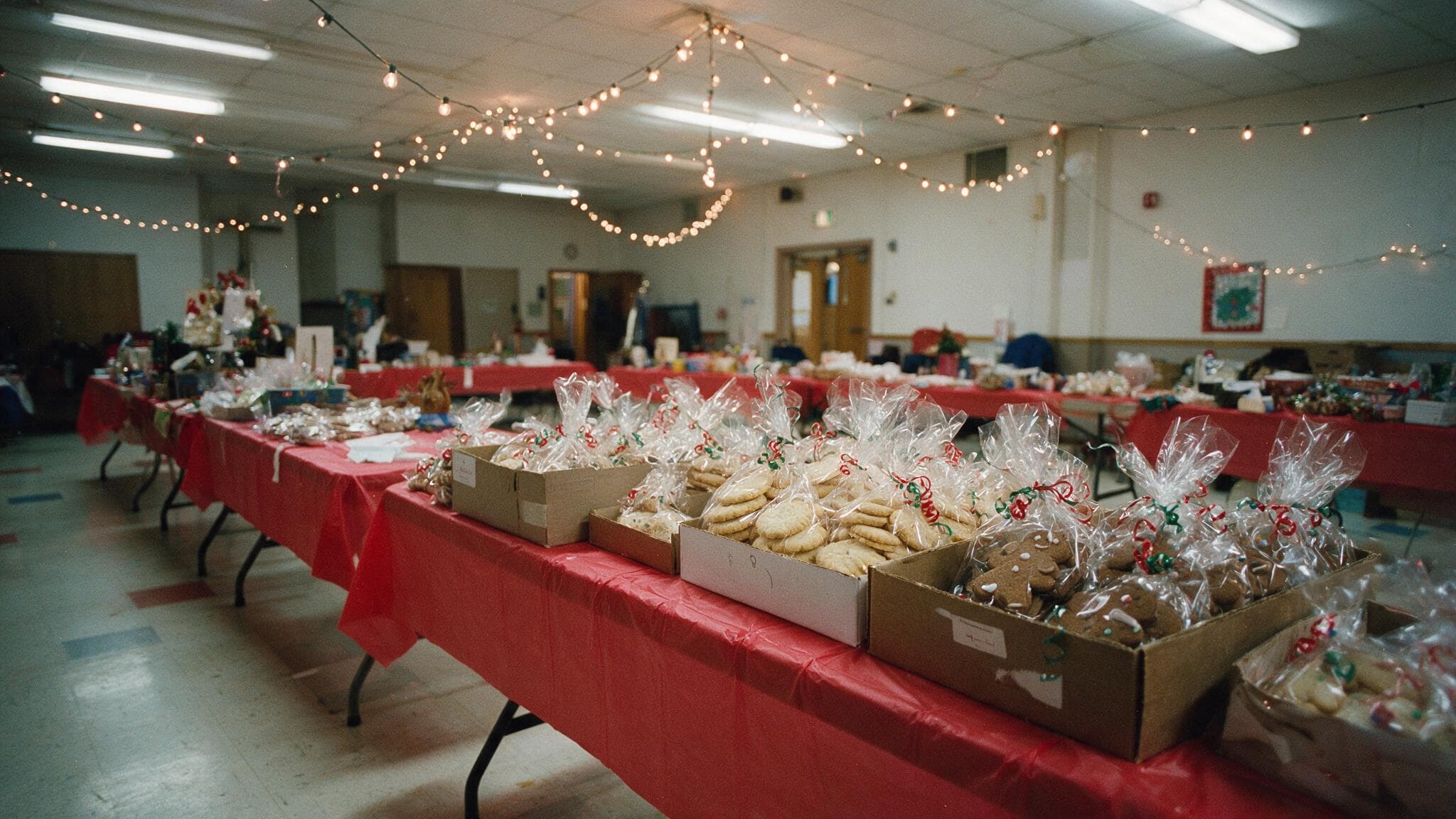
Christmas markets, church and mosque bazaars, school fundraisers, Eid and Diwali sales. The appeal is concentration: a single December weekend can out-earn an ordinary month, because everyone walking past is already shopping for gifts and hosting. The catch is the calendar. The good ones fill their vendor lists in late summer, so December is booked in August.
6. Corporate and workplace orders
Office birthdays, client gifts, staff appreciation days, holiday parties. These carry by far the highest average order value on this list, since one order can be worth thirty retail ones, and they repeat on a schedule. They also expect things retail customers don't: a real invoice, a firm lead time, and an answer about allergens. Worth the extra formality.
7. Local cafés and shops, carefully
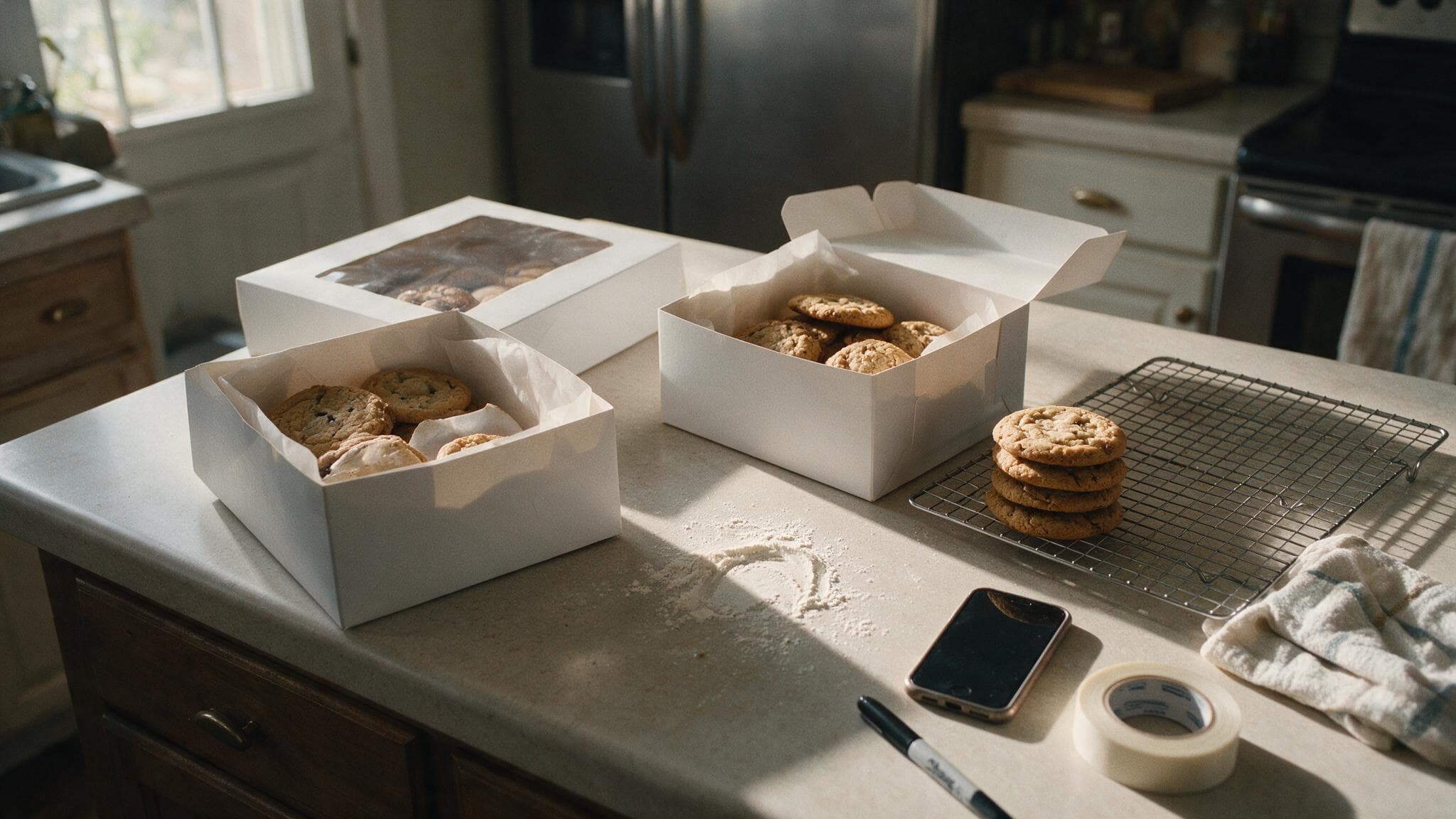
Putting your cookies on a café counter feels like the natural next step. It's also the one channel on this list that can quietly void your home-kitchen exemption, because it isn't a direct sale any more. It's wholesale.
In Quebec this is explicit: selling transformed food to an intermediary for resale is forbidden from a home kitchen, full stop. In Ontario, selling routinely outside farmers' markets and direct channels can get your kitchen reclassified as a commercial bakery. If a café wants your product, ask your public health unit *before* you say yes, not after.
8. Etsy, for some of what you bake
Etsy allows edible items, but only shelf-stable ones: cookies, brownies, granola, hard candy. Cakes, cream-filled pastries and fresh bread are prohibited outright. So if custom cakes are your business, Etsy simply isn't a channel. And even for cookies you're paying listing and transaction fees to rent an audience you never get to keep.
Where to actually start
Pick two, not eight. One channel that puts you in front of new faces, like a farmers' market or a holiday bazaar, and one you own outright, where those people go to reorder. The first is how they find you. The second is why they come back.
A market stall gets you fifty customers on Saturday. An order link is how forty of them buy from you again in November without you standing anywhere.
Once you know where you're selling, the next question is what to charge. Start with the pricing formula.